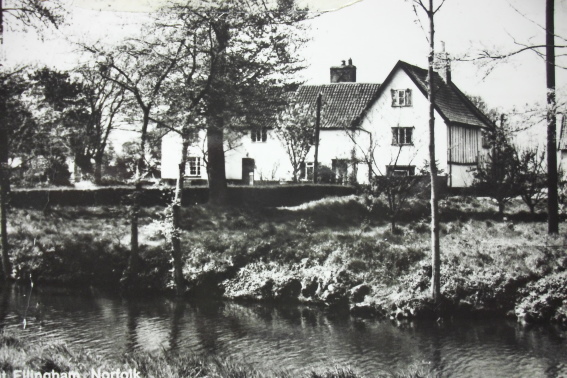
Great Ellingham Hall 1960s
Courtesy of Susan Fay
The British Listed Buildings website suggests that Great Ellingham Hall was built c.1570. However, I believe it may have been a little earlier.
During the 16th century, Anthony Gurney began a ‘re-build’ of Great Ellingham Hall. He died in 1556. The Gurney family also owned property and land elsewhere, including an estate at West Barsham.
Following his death – but several years later, Anthony’s grandson, Henry Gurney (on reaching his majority in 1569), continued his grandfather’s ‘re-build’ at the family’s Great Ellingham estate.
Great Ellingham Hall and the ‘lordship’ of the Manor of Ellingham Hall remained in this line of the Gurney family until the death of Henry Gurney (born 1632) around 1660. He is the son of Edward (Ned) Gurney. Although married when he died, this Henry Gurney (1632-1660) left no issue.
Davy Family
The Manor of Ellingham Hall and the estate then came into the tenure of the Davy family of Great Ellingham, through Margaret Gurney, the younger sister of Ned Gurney (1608-1641).
Margaret married William Davy of Great Ellingham. This Davy family originally came from the Gunthorpe and Ingoldisthorpe area.
In his will, Ned Gurney appointed his brother-in-law William Davy as one of his executors. The will was proved in 1642. Ned’s son, Henry (1632-1660), inherited the main Gurney ‘seat’ of West Barsham as well as other lands.
Negotiations for Sale to Henry Davy
Before he died, Henry Gurney (1632-1660) was in the process of negotiating a sale of a property in Great Ellingham to William Davy’s brother, Henry Davy Jnr.
Henry Davy’s will of March 1659 indicates that he intended to obtain ‘Great Ellingham’ to add to his properties which he (Henry Davy) had in London and Norwich. Nevertheless, it seems that Henry Davy died before the transaction was completed.
Deaths of Henry Davy & his brother William Davy
In his will, Henry Davy appointed his brother, William Davy, as his sole executor and the residuary legatee of his estate (after the payment of debts, charges and legacies).
As it happens, Henry’s will was not proved until after the death of his brother, William Davy, who died on the 1st April, 1667, having made his will in May 1666.
William Davy’s wife, Margaret (nèe Gurney) died before William. It was William Davy’s wish to be buried near to his wife and brother Henry in the church at Great Ellingham. We can only assume that this wish was fulfilled. William Davy left an only daughter and heiress Mary Davy.
1665 Settlement upon Marriage
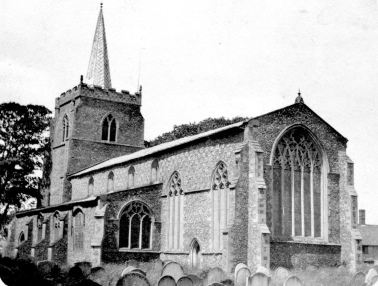
Church of St James, Great Ellingham
Prior to the deaths of her uncle and father, Mary Davy had married Roger Potts in Great Ellingham church in 1665.
On the 1st February, 1665, William Davy settled a portion (dowry) of £1,500 on his only daughter, Mary, for her marriage to Roger Potts.
The parties to the Marriage Settlement were Sir John Potts Snr & John Potts Jnr (grandfather and father of Roger Potts), William Davy (Mary’s father) & Anthony Webb, gent. of London, and Roger Potts & Mary Davy.
Binding Contract
Marriage settlements were legally binding contracts among families. They were usually completed before the marriage takes place.
In essence, they usually provide for the management of property and give security for the couple (sometimes limited to their lifetime), and their children. The settlements often protected the bride’s dowry and set up ‘jointures’ for her livelihood. They generally ensured that land stayed within the family line.
Mannington & Great Ellingham Estates
Whilst Mary brought £1,500 to the marriage, Roger came with property including the Mannington Estate and all its manors and lands.
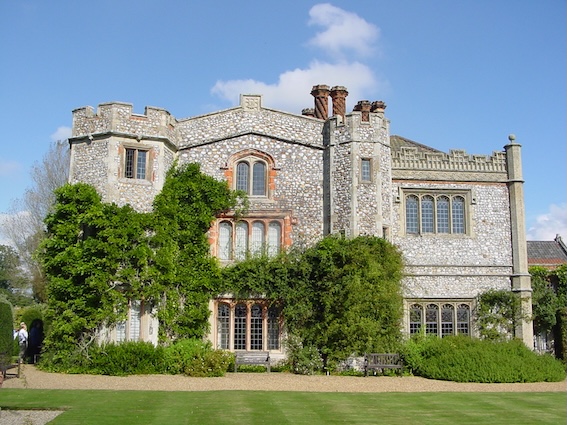
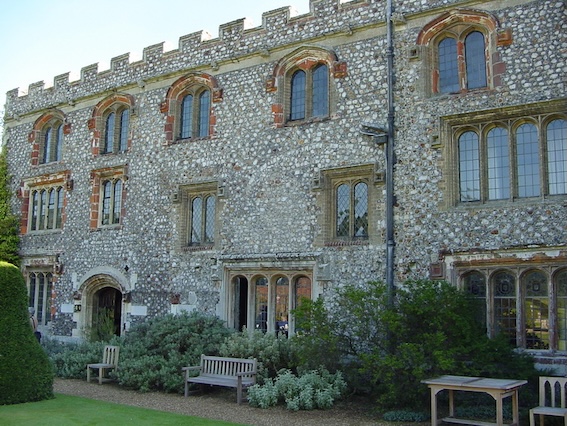
Some three years before his marriage, Roger’s grandfather and father ‘settled’ land in Irmingland and Itteringham on Roger. However, the Mannington Estate (and all its manors and lands) would only pass to the couple after the determination of Roger’s father’s life interest. However, some of the lands were now mortgaged.
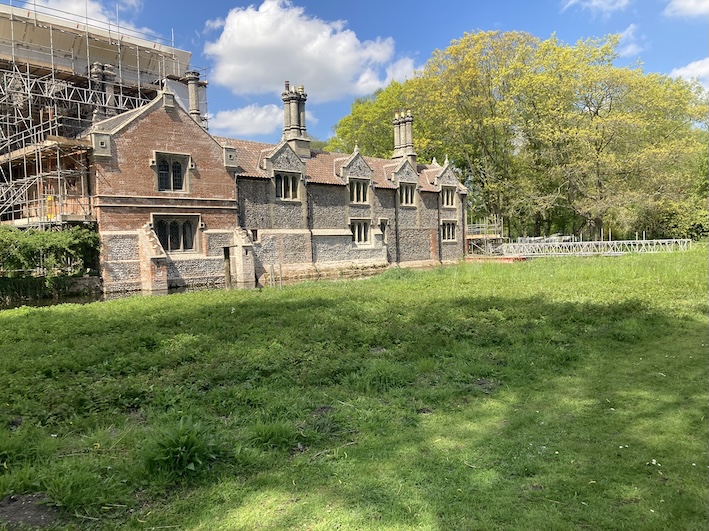
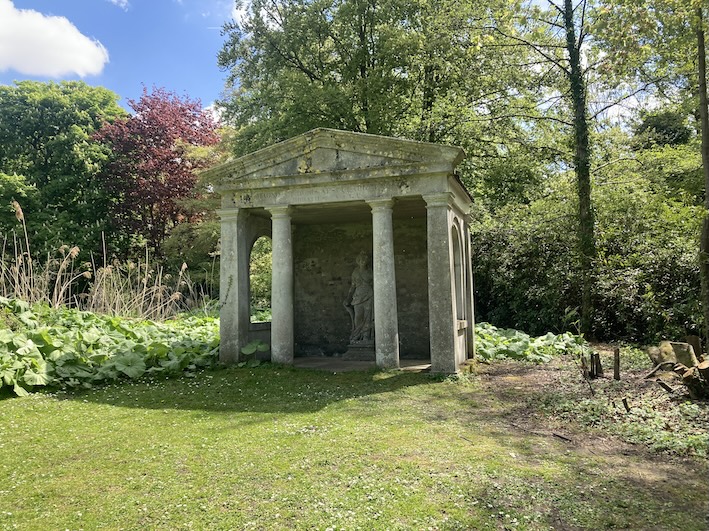
Nevertheless, within a few years, the couple also had the ‘Great Ellingham Hall estate’.
Roger Potts’ Early Life
Roger Potts was born c.1642 to John Potts Jnr. and his wife Susan nèe Heveningham. His grandfather was Sir John Potts, the 1st Baronet of Mannington.
He was educated at Enfield School. His grandfather (Sir John Potts) lived nearby and took care of Roger’s education and maintenance. Sir John continued this arrangement through Roger’s time at Caius College, Cambridge and the Inns of Court in London. He also paid for Roger’s admittance to a chamber in the Inner Temple.
The Potts Family Home – Great Ellingham Hall
Following their marriage in 1665, Roger and Mary Potts lived at Great Ellingham Hall. In the interesting book ‘See You In Court The Potts Family of Mannington Norfolk 1584-1737‘ the authors write that Roger and Mary Potts “lived a comfortable life as a country squire in Great Ellingham”.
It is probably worth mentioning that it is a time some 450 years ago when Charles II occupied the throne of England, Scotland & Ireland. It was a time of the Great Plague (bubonic) in the UK which was brought about by flea infested rats. 1665 was also the year before the Great Fire of London!
Contemporaries
Village contemporaries of Roger and Mary Potts include Ann Greene and John Below who married in St James on the 12th November 1666, Symon and Martha Turner whose son was baptised in the January of 1667.
Edward and Esther Reynolds, William Caddy, John and Margaret Okeley, John Lait, Edward and Mary Turner, Daniel & Bridget Frost, George & Elizabeth Asty and Thomas Rushbrooke to name but a few of the others living in the village at this time.
It is doubtful that many (if any) of these villagers were of the same, or even a similar, social standing to Roger and Mary Potts.
Children
Nonetheless, child mortality affected all classes of society.
Roger and Mary had 9 known children. Their first child, James, was baptised in St James’s Church on the 16th February, 1666. He died between 1678 and 1682.
Susan arrived c.1668, Ursula 1670, Philip in 1671, Algernon in 1672, John was buried c.1674, Mary arrived c.1674 but was buried in 1676, Charles arrived before 1675 and Anne was baptised in 1677.
Algernon outlived Philip, and became Roger Potts’ heir.
Steward
It is possible that Roger Potts employed a steward to deal with the day-to-day running of the Manor of Ellingham Hall. This would entail the administration of legal and financial affairs pertaining to the manor as well as presiding over the manorial court. He would also be responsible for the collection of rents and services due to Roger Potts as lord of the manor.
In 1674, this steward was 33 year old John Frost of Ellingham.
Standing for Parliament
Notwithstanding Roger’s life as a ‘country squire’, by 1675 (and following the deaths of both his grandfather and father), Roger became the 3rd Baronet of Mannington.
In 1689, Sir Roger stood as a Whig party candidate in the Parliamentary elections. However his standing was unsuccessful. Later, he changed his affiliation to the Tory party.
Nonetheless, Sir Roger was involved in county affairs. He was a Justice of Peace as well as a tax commissioner.
Family Disputes
For extended periods, Sir Roger and his eldest (surviving) son, Algernon, were not on speaking terms. There were also family disputes over money and debts. In particular, between Sir Roger and his sister Elizabeth concerning their late father’s will. This resulted in various actions through the courts.
By the late 17th century Sir Roger had become heavily in debt. This continued into the 18th century. As a result, a substantial number of mortgages were taken out on the Mannington Estate, as well as over other of Sir Roger’s properties. These mortgages were regularly being given and/or being re-assigned.
Mary Potts (nèe Davy) may have died around 1701.
1710 Deed of Settlement
On the 3rd October, 1710, Sir Roger (then aged around 68), completed a family Deed of Settlement.
The parties involved were (1) Sir Roger Potts (then said to be of Mannington) (2) & his son, Algernon Potts of Norwich (3) Thornhaugh Gurdon Esq., of Norwich & Jacob Preston of Beeston St Lawrence (the Potts family trustees and ‘owners at law’ of the ‘Potts trust properties’) and (4) Clement Hyrne of Haveringland & Robert Britiffe Esq., of Norwich (Sir Roger’s executors).
Debts
The main purpose for the Deed of Settlement was that the Pott’s estates of Great Ellingham, Clippesby and Mannington should be used to pay the debts of Sir Roger and his son Algernon. These debts were listed on a schedule which was attached to the Deed.
Once the debts were settled, Algernon would receive the remaining rents and profits for life. Sir Roger would receive a fixed annuity of £240 per annum.
The schedule contained details of 16 creditors with a collective total debt owing to them amounting to £10,990. This is a substantial debt.
Sarah Long’s Debt
The largest debt is £3,000 owed to widow Sarah Long.
This relates to Sir Roger’s daughter Susan’s ‘portion’ (dowry) on her marriage to Matthew Long in December 1702. Matthew Long is the son of Israel Long and his wife Sarah of Dunstan Hall. Israel Long had died leaving his widow Sarah his executrix. Sarah pursued Sir Roger for the £3,000 by taking out a writ against him.
By 1710, Sarah Long along with Robert Britiffe Esq., (Sir Roger’s executor as well as acting for the Long family), gained a final concord (agreement) giving rights to the manors and estates of Great Ellingham and Clippesby.
Discussions with the de Greys
It appears that Sir Roger was, in any event, willing to sell the ‘Ellingham Estate’ (Great Ellingham Hall and the Manor of Ellingham Hall estate). Around 1710, he discussed having a property description of ‘Ellingham’ drawn up.
Enquiries were also made with the de Greys of Merton. This family had for many generations, held the Manor and Estate of Bury Hall as well as other estates and properties. It was thought that the de Greys might be interested to expand their ‘Ellingham Estate’.
Death of Sir Roger Potts
Sir Roger’s health was in decline. In January 1711, negotiations were still ongoing with the de Grey family. As it happens, it was not the de Greys who purchased the ‘Ellingham Estate’ but Francis Coleman. However, Sir Roger did not live to see the sale of his ‘Ellingham Estate’. He died on the 14th October, 1711.
New Owner Francis Coleman
Francis Coleman completed his purchase of the Great Ellingham Estate (including Great Ellingham Hall and the Manor of Ellingham Hall), in September, 1712.
Most, if not all, of the proceeds of sale was used to repay some (or all) of the Potts family debts.
Debts Repaid
Sarah Long received £2,200 (part of the £3,000 owed to her). The balance of £800 being secured over the Potts’ Clippesby estate.
A mortgage to spinster Alice Hare and Ralph Hare Esq. of Hargham was also settled in full. In 1697, the Hares had advanced £1,000. This debt with interest had been secured on the Great Ellingham Estate. Ralph Hare had died in 1709 leaving Alice to collect in the principal debt with interest.
New Family
After some 150 years, the Gurney’s link to Great Ellingham Hall had come to an end. The Coleman family’s ownership would span the next 100 years!
Sources:
The Record of the House of Gournay. Internet Archive https://archive.org/stream/recordhousegour02gurngoog/recordhousegour02gurngoog_djvu.txt accessed 12 March 2026
https://freepages.rootsweb.com/~kell/genealogy/dad/hooe/mort.pdf
Anderson Verily. 1980. Friends and Relations. Three Centuries of Quaker Families. Hodder & Stoughton. ISBN 0 340 2214X. Pages 24, 26, 27, 29-31, 33-4, 37, 39, 44, 47, 62, 69, 75, 81
Vaughan-Lewis William & Maggie. 2009. See You In Court The Potts Family of Mannington Norfolk 1584-1737. The Lavenham Press Ltd. ISBN 978-0-9561795-0-0. Pages 329, 331, 343, 346, 348, 354, 356-61, 368-70, 381, 386-7, 391-8, 411-2, 418-454, 457, 460-2, 463-4, 476, 478, 480, 482-506, 515, 522, 529-30, 532-3, 569, 572
Great Ellingham Parish Registers. Norfolk Record Office PD 609. Also available online via www.familysearch.org and www.ancestry.co.uk